news / Resources and prevention
A safe ride is part of trafficking recovery. Who makes it available?
Materials posted for today’s federal transportation meeting put access, survivor choice and measurable support alongside recognition and reporting.
Source review: November 4, 2026
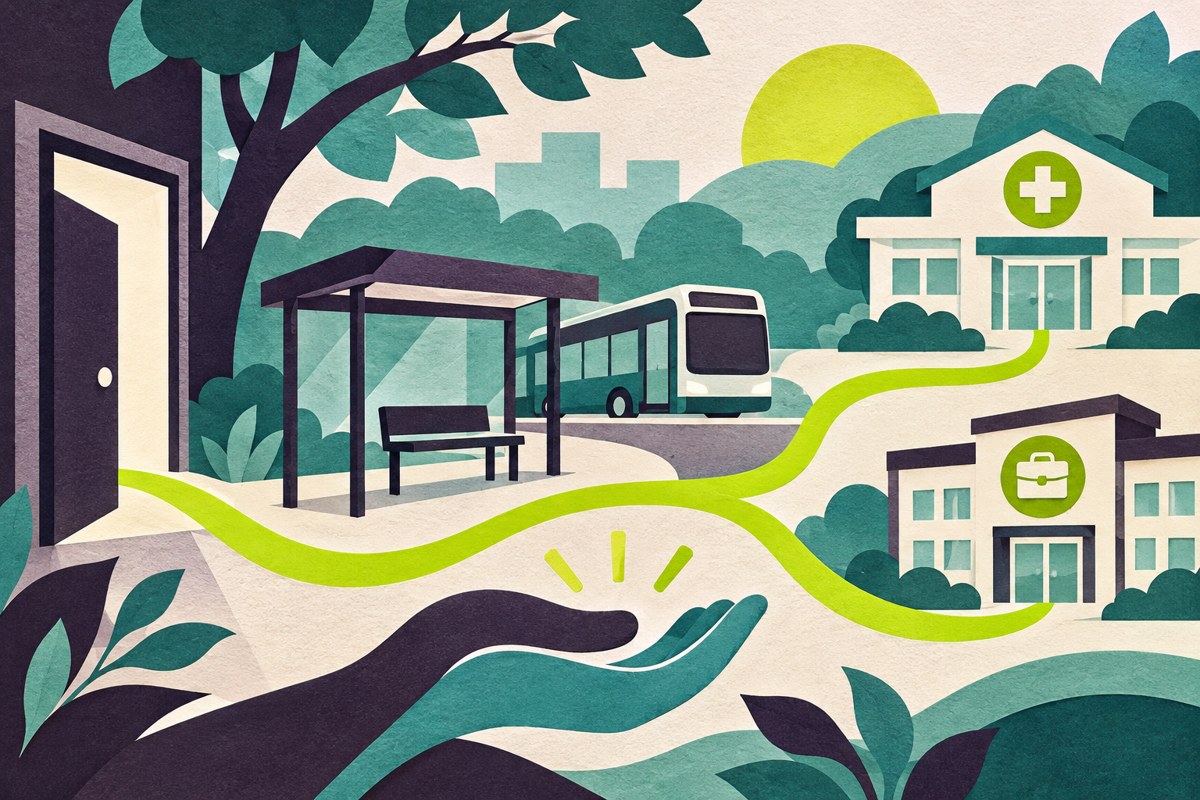
A person may recognize exploitation and know where to ask for help, yet still be unable to reach it. A safe way to travel can determine whether an appointment, a support service or a job is a real option.
That practical problem runs through materials posted for the U.S. Department of Transportation’s November 4 trafficking advisory committee meeting. They frame transportation as part of safety and recovery, as well as a setting where workers may recognize and report suspected exploitation.
The virtual meeting is scheduled for 9 a.m. to 4 p.m. Eastern under its revised agenda. This report examines the posted materials, not meeting outcomes or newly adopted policy.
Transportation can expand a person’s choices
In the published presentation, U.S. Advisory Council on Human Trafficking member Sameer Jain describes transportation’s different roles in a survivor’s experience. Systems used to recruit, move, monitor or isolate someone can also provide access to care, employment, family and other support.
His materials treat restricted transportation and mobility as potential forms of control. They call for survivor expertise in designing services and for practical options that account for someone being monitored or facing barriers to communication. The emphasis is on whether people can use an option safely, not simply whether an option exists on paper. Official presentation deck, survivor-council section.
That changes the question for a transportation provider or support organization. Posting a hotline number can make a resource visible. A person may also need a confidential conversation, a usable referral and a way to get to the service without increasing danger.
The same concern continues after an immediate exit. Reliable transportation can affect access to follow-up care, services and economic opportunity. An emergency journey and sustained access solve different parts of the problem.

Questions drawn from the survivor-access and research themes in the November 4 materials. This is not a promise of available transportation assistance.
Count outcomes, not just activity
The research presentations also ask how the field knows whether its work helps. Kezban Yagci Sokat of San José State University identifies gaps in comparable measurement, evidence about implementation, and long-term survivor-centered outcomes.
Training attendance, outreach materials and public impressions describe activity. They cannot, on their own, show whether someone reached support, experienced less harm or gained more control over daily life. The materials point toward examining safety, service access and well-being over time. Posted research presentations.
Some slides draw on older surveys and research. Those findings should be read with their dates, respondent groups and limits, rather than treated as a new national count of trafficking. Likewise, a recommendation in a presentation does not establish that an agency has adopted it or that a service is available everywhere.
What today’s meeting can, and cannot, provide
The DOT advisory committee develops recommendations on countering trafficking in the transportation sector. Its agenda includes federal-agency briefings, a survivor-council presentation, research and discussion of potential gaps.
The committee page says registration, requests to comment and accommodation requests for this meeting have closed. The revised agenda says no requests for public comment were received by the Federal Register notice deadline. The next meeting listed in the official notice is December 10; readers should check DOT’s current page for updated participation information.
The posted materials offer a public record of the questions being put before the committee. They do not create an individual entitlement to a ride, a flight or a shelter placement.
A local option, with an important limit
In the Augusta area, United Way of the CSRA’s 2-1-1 service lists transportation assistance among its information and referral categories. Readers can call 2-1-1 or 706-826-1495 to ask about current local options.
Its separate Ride United program page, however, carries a significant restriction: rides are currently available only for homeless shelters and partnering hospitals for patient discharge. Readers should not assume that the program offers an on-demand ride for any purpose or that trafficking-survivor status alone establishes eligibility.
For people also experiencing domestic violence, SafeHomes’ rural outreach program says it can provide transportation for clients to its facility or to relocate to safety. Its listed service area includes Richmond, Columbia and eight other East Central Georgia counties. The organization’s 24-hour crisis line is 706-736-2499. Ask an advocate about eligibility, present capacity and safe arrangements; this is a domestic-violence service, not a universal transportation program.
If transportation is keeping you from help
If you or someone you know may be experiencing trafficking, the National Human Trafficking Hotline provides access to trained advocates and connections to support. Call 1-888-373-7888, text 233733, or use the chat linked on its official website when it is safe to do so. The hotline’s website also provides information about safety planning and its confidentiality policy.
When discussing options with an advocate or provider, explain that transportation is a barrier. Ask whether help is available for the particular trip, what requirements apply, and how communication or travel can be arranged safely. Availability and eligibility vary; a referral does not guarantee transportation or a place to stay.
In immediate danger, call 911 when safe. Do not confront a suspected trafficker or post someone’s identity or travel plans online.
Trafficking Watch does not receive tips, dispatch assistance or arrange rides. Its help page points readers toward support resources. The question raised by today’s materials is one worth carrying into every referral: can the person safely reach the help being offered?